
Houston aviation brings to mind airline terminals, departure boards and trips that begin with a boarding pass. Personal and business aircraft are another part of the region’s aviation story, connecting flying to an entirely different set of experiences.
A flight can be about a weekend away, time spent learning with an instructor or travel for work. Those broad uses are part of general aviation: flying that sits beyond the familiar world of scheduled airline journeys. They give aircraft ownership a place in the life of a large metropolitan area.
Flying for different reasons
The appeal of personal flying is not tied to one kind of trip. For an aviation enthusiast, time in an aircraft can be an interest in its own right. For someone learning to fly, each lesson is a step toward a new skill. For a business aircraft owner, flying is connected to the work and travel that aircraft supports.
These are different relationships with aviation, yet each brings attention back to the airport. A runway may be the most visible part of a flight, but an aircraft’s home base includes the buildings and people around it as well.
That is where the regional airport becomes more than a point on a map. It provides a setting for flying to become a regular part of life.
Airports with their own identities
Two examples illustrate the variety in the Houston area.
To the north, Conroe–North Houston Regional Airport is based in Conroe. Its official website describes a control tower, fixed-base operators and a general aviation terminal, together with businesses on the field. KCXO gives the north Houston area a distinct airport identity of its own.
Ellington Airport offers another view of the region’s aviation landscape. Houston Airports identifies general aviation there and lists NASA, the Texas Army National Guard and the Lone Star Flight Museum among its tenants. Its broader mix connects personal flying with government aviation and aviation heritage.
These two airports tell different parts of the same regional story. Houston’s aviation landscape includes more than one type of airport and more than one reason to fly.
The place of a hangar
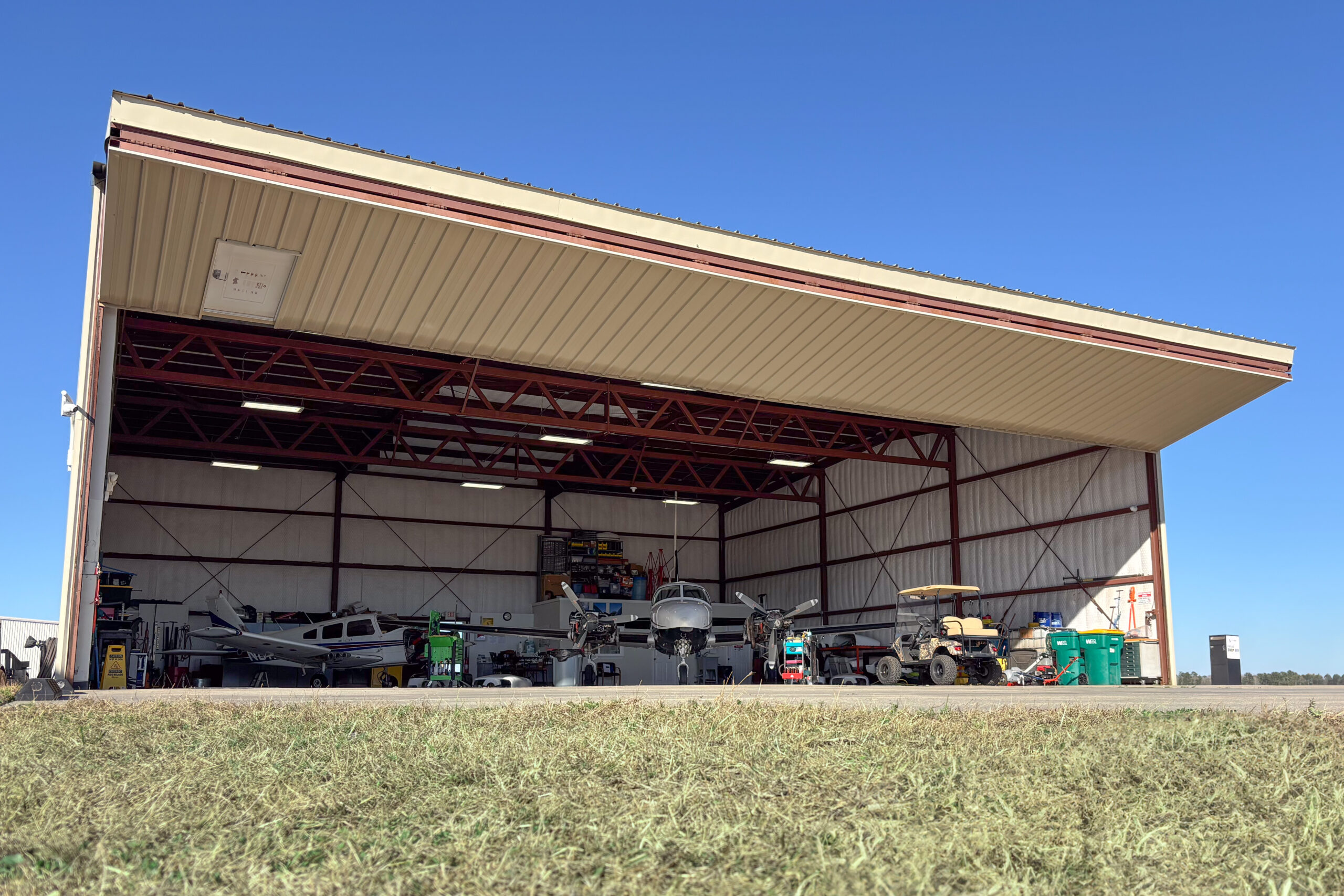
For an aircraft kept indoors, the hangar is the link between a flight and a home airport. It is where the aircraft stays between trips, creating a familiar starting point for the next departure.
The idea is practical, but it also has an emotional appeal. An aircraft represents plans, interests and journeys; a hangar gives those things a place. Whether the next flight is for enjoyment or work, the home base remains part of the experience.
This is why hangars belong in a discussion of Houston aviation. They are the buildings that connect the aircraft in the sky with the airports on the ground.
A home base in Conroe
CXO Hangar is on the field at KCXO. If you are interested in making Conroe your aircraft’s home base, join our hangar waitlist for renting, buying or either. The list records your interest; it does not reserve a hangar.
Houston’s aviation story has room for airline travel, personal flying and business aircraft. The Hangar Journal explores the places and spaces behind that wider world.
Some articles on this site are created with the assistance of AI technology.