
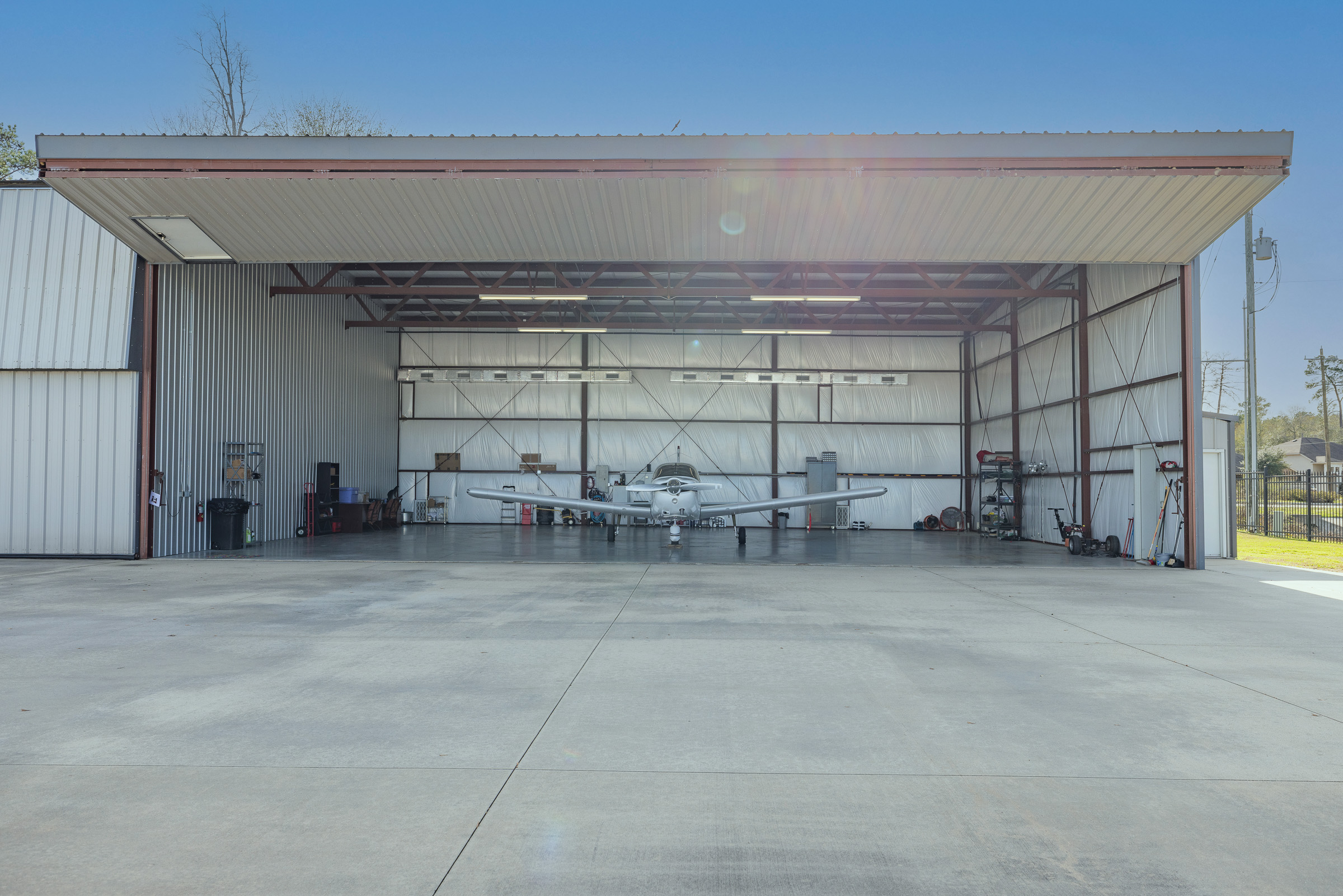
A hangar is one of aviation’s most familiar buildings. Its wide opening and generous interior have a straightforward purpose: giving an aircraft a place to come home between flights. Around Houston, that idea connects personal flying, business travel and the airports where aircraft are based.
Hangars also give an airport a recognizable character. Beyond the runway and terminal, they are the buildings associated with aircraft ownership—the place where the next flight begins to feel close, even while the airplane is standing still.
The familiar shapes of a hangar
Hangars take several forms. In its Airport Design guidance, the FAA describes conventional hangars, often called box hangars, alongside T-hangar layouts.
A box hangar has a square or rectangular footprint. That simple shape can accommodate different aircraft-storage arrangements, from an individual aircraft’s space to a building used by several aircraft. The name describes the building’s form rather than a single size or style of operation.
T-hangars organize aircraft storage into tee-shaped bays. The wider part of a bay accommodates the wings, while the narrower portion follows the aircraft’s tail section. Standard and nested layouts arrange those bays in different ways. It is an approach that gives a row of individual spaces a distinctive floor plan.
Those differences help explain the variety of buildings seen on an airfield. They are different ways of creating the same essential thing: indoor space devoted to aircraft.
Individual spaces and shared hangars
The shape of the building is one part of hangar life; the way the space is used is another. An individual bay or private hangar creates a separate space for an aircraft. A shared hangar brings several aircraft into one building.
Each arrangement has its own feel. A private space emphasizes an individual home base. A shared building places an aircraft within a larger storage setting. Neither description tells the whole story of a particular property, but together they illustrate how varied hangar life can be.
That variety is part of the appeal of general aviation. Aircraft owners fly for different reasons, and their home airports contain buildings that reflect different kinds of flying.
A home between flights
There is something appealing about a place that belongs to the flying part of life. A hangar gives that idea a physical form: an aircraft under a roof, with the airport just outside the door.
For a hangar-kept aircraft, each departure and return connects a trip to the same home base. Flying may take the owner somewhere new; the hangar is the familiar place waiting at the other end of the journey.
At Conroe–North Houston Regional Airport, CXO Hangar is part of that north Houston aviation setting. If Conroe is where you would like to base an aircraft, join our hangar waitlist and tell us whether you are interested in renting, buying or either. Joining records your interest and does not reserve a hangar.
Some articles on this site are created with the assistance of AI technology.